Tree Removal Rockhampton: Do I Need A Permit To Cut Down A Tree On My Property?
Published: 17 May 2022 Updated: 9 July 2026
A tree on your own block feels like it should be yours to deal with as you see fit. In practice, that is not always the case. Councils across Queensland regulate the removal of certain trees to protect local ecosystems, manage stormwater and preserve the character of established neighbourhoods, and getting it wrong can mean fines rather than a tidier yard. Before booking in tree removal, it pays to understand which trees are protected, which ones are not, and how the approval process actually works.
This guide walks through when a permit is required, what council looks at when assessing an application, and how a qualified arborist fits into the process of
tree removal in Rockhampton.
Why Tree Removal Rules Exist
Local governments regulate tree removal for reasons that go beyond aesthetics. Mature trees stabilise soil, support local wildlife corridors and help manage runoff during heavy rain, so councils generally want removals assessed rather than left entirely to a property owner's discretion.
Rules typically apply based on a combination of factors:
- Trunk diameter or circumference at a set height above ground
- Whether the species is native or listed as significant
- Proximity to waterways, wetlands or erosion-prone land
- Whether the tree sits within a heritage-listed or conservation area
- The tree's height and canopy spread relative to the size of the block
These thresholds vary between councils, which is why a rule that applies on a neighbouring property elsewhere in the state will not automatically apply to you.
Trees You Generally Don't Need a Permit For
Not every tree on a residential block is protected. Most councils exempt certain categories from approval requirements, provided the tree meets specific criteria. Common exemptions include:
- Trees below a minimum trunk diameter (often measured at 1 metre or 1.5 metres above ground level)
- Recognised weed or environmental pest species listed under state or local biosecurity rules
- Non-native fruit trees and ornamental plantings in established gardens
- Trees that are dead, but only once council confirms they meet the definition of dead rather than simply damaged
- Trees planted in the wrong location by a previous owner where removal is part of routine garden maintenance
Even where a tree looks like a straightforward exemption, it is worth confirming with council before removal starts. Exemption criteria are specific, and a tree that appears to qualify on size alone can still be protected for other reasons, such as being part of a mapped vegetation corridor.
Rockhampton Regional Council's Tree and Vegetation Approval Process
For properties within the region, tree removal is generally managed through Rockhampton Regional Council's Tree and Vegetation Approval permit. This approval type applies to the removal, lopping or significant pruning of regulated vegetation on private land, and covers both native bushland remnants and mature trees within urban blocks.
The general process for tree removal in Rockhampton generally follows these steps:
- Check whether the tree meets the council's size, species or location thresholds for protection
- Submit a Tree and Vegetation Approval application, including a site plan showing the tree's location relative to boundaries, structures and any waterways
- Provide supporting documentation where requested, which may include an arborist report for larger or higher-risk trees
- Wait for assessment, which can include a site inspection depending on the scale of the works
- Receive a decision, along with any conditions attached to approval, such as offset planting or timing restrictions
Because assessment criteria can be detailed, it is worth confirming current requirements directly with council before lodging an application, since permit types and mapping overlays are reviewed periodically.
How Do I Find Out If My Tree Is Protected?
The most reliable way to establish a tree's status is a proper site assessment rather than a guess based on size or appearance. This is where a qualified arborist adds real value, particularly for trees near boundaries, powerlines or structures where the consequences of getting it wrong are more than just a fine.
At Browns, assessments are carried out to a Level 5 Arborist standard, supported by QAA membership and an Advanced Tree Felling Certification. That combination means the person assessing your tree understands not just whether it is likely to be protected, but how it should be safely removed if approval is granted. A proper assessment typically considers:
- Species identification and whether it falls under a protected category
- Trunk diameter and canopy measurements against council thresholds
- Structural condition, including signs of disease, decay or instability
- Proximity to easements, powerlines, fences and neighbouring properties
- Whether the site falls within a mapped vegetation or waterway overlay
Where a permit application requires supporting documentation, a detailed arborist report can be prepared to accompany the submission, setting out the tree's condition and the justification for removal.
What to Include in a Permit Application
A complete application moves through assessment faster than one submitted with gaps. Councils generally expect:
- A clear site plan showing the tree's exact location
- Photos of the tree from multiple angles, including the base and canopy
- The reason for removal, whether that is structural risk, disease, building works or another documented cause
- Any relevant supporting reports, such as an arborist assessment for significant or high-risk trees
- Details of who will carry out the work, particularly where the tree is large or near infrastructure
Incomplete applications are one of the most common causes of delay, so it is worth checking the council's current checklist before submitting.
Overhanging Branches and Boundary Trees
Trees growing on or near a property boundary raise a slightly different set of questions. Branches or roots crossing into a neighbouring property do not automatically remove the need for approval, particularly if the trunk itself is protected. Before trimming or removing a boundary tree:
- Confirm which property the trunk is actually growing on, since this generally determines who is responsible for approval
- Check whether the tree is protected before assuming boundary location changes the rules
- Discuss significant works with a neighbour where the tree affects a shared fence line or overhangs their property
- Document the condition of the tree before work begins, particularly if there is any dispute about necessity
Why Professional Assessment Matters Before You Cut
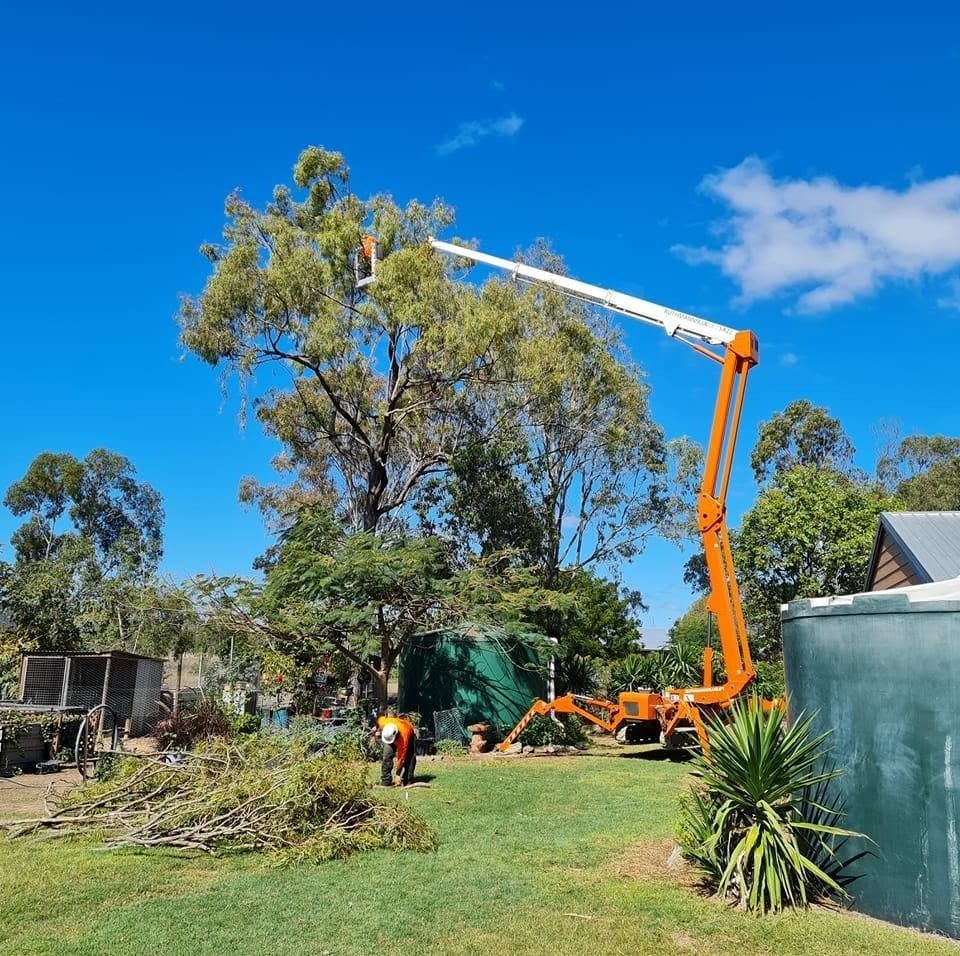
Removing a tree without confirming its status is one of the more expensive mistakes a property owner can make, since the cost of a fine or remediation order generally outweighs the cost of getting an assessment first. Whatever the reason behind it, tree removal in Rockhampton should always start with an assessment of what council actually requires. A professional assessment before work begins helps you understand:
- Whether the tree requires council approval at all
- What conditions, if any, might attach to a permit
- The safest and most practical method for removal
- Whether the job requires specialist equipment or traffic and safety management
Our tree removal service covers this assessment stage as part of the broader job, so the removal itself is planned around what council actually requires rather than guesswork.
Frequently Asked Questions
What happens if I remove a protected tree without a permit?
Removing a protected tree without approval can result in significant fines under state and local vegetation laws, and in some cases councils can require remediation such as replanting. Penalties vary depending on the tree's protection status and the extent of the works, so it is worth confirming approval requirements before any cutting begins.
How long does a council permit take?
Processing times vary depending on the complexity of the application and whether a site inspection is required. Straightforward applications with complete documentation are generally assessed faster than those missing supporting information, such as an arborist report for a significant tree.
Do storm-damaged or dead trees still need approval?
Not always, but this depends on how council defines “dead” versus “damaged”. A tree that has lost branches in a storm but is still alive may still be protected, while a genuinely dead tree can often be removed without a permit. Confirming the tree's actual condition with a qualified assessor avoids relying on assumptions that turn out to be incorrect.
Can Browns apply for the permit on my behalf?
Yes. Where an application requires supporting documentation such as a site plan or arborist report, our team can prepare this and assist with the submission process, so you are not left interpreting council requirements alone.
Do I need approval to prune rather than remove a tree?
Significant pruning of a protected tree can fall under the same approval requirements as full removal, particularly where the works affect a large portion of the canopy. Minor, routine pruning is generally exempt, but it is worth checking before undertaking anything beyond light maintenance.
Get the Right Advice Before You Cut
We at Browns Vegetation Management understand that Rockhampton's mix of established suburban blocks, waterway-adjacent properties and mapped vegetation corridors can make it genuinely difficult to know where you stand before removing a tree. Between council mapping overlays, seasonal storm damage and the size of many established trees in the region, getting a professional opinion before you start work is the difference between a straightforward job and an unexpected fine.
If you are considering tree removal in Rockhampton and are not sure whether a permit applies, get in touch with our team on 0407 731 821. We can assess the tree, advise on next steps and, where a permit is required, help prepare the documentation council needs.